
If you've ever stared at a folder of 150 CVs wondering where to start, this guide is for you. Pre-employment assessment tests — set up correctly — are the single highest-leverage change a UK hiring team can make in 2026.
Here is the exact playbook we use at NexaHire, and that we now give every employer free through our Talent Screener tool.
The shortlisting problem
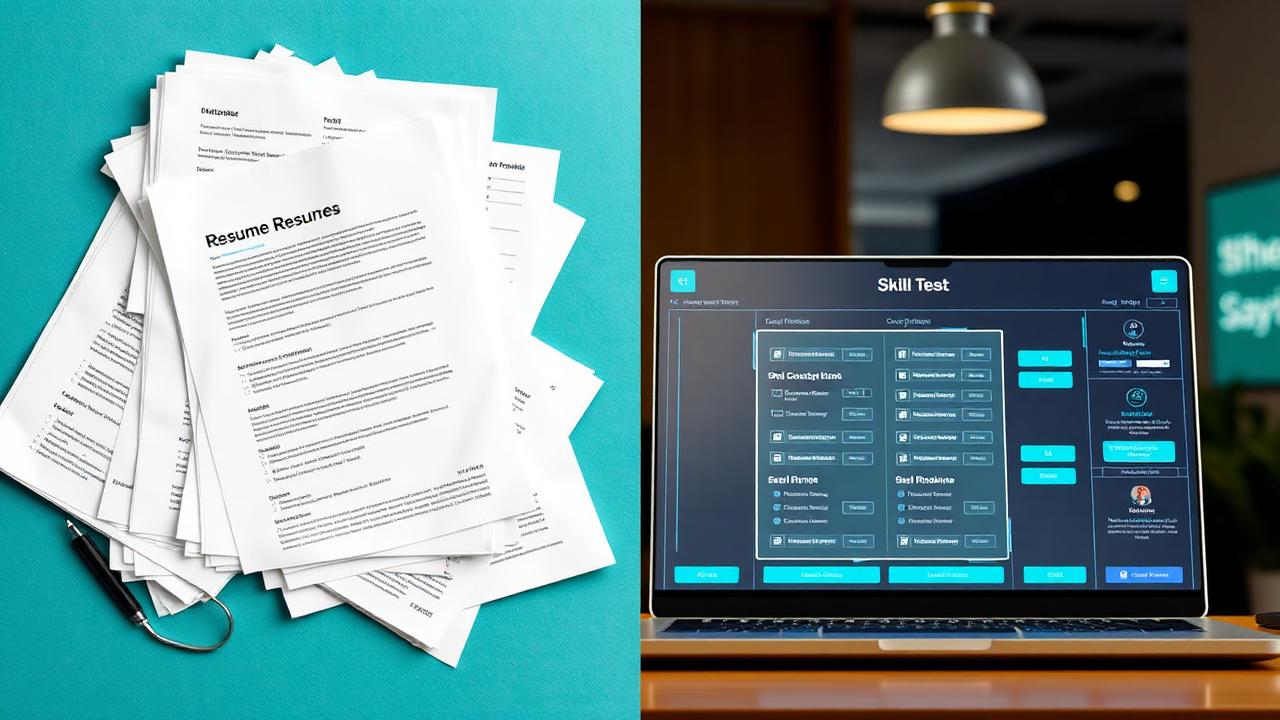
The average UK job posting receives 86 applications (REC, 2025). For tech roles in London, that number doubles. Manual CV review takes 5–7 minutes per CV, which means a single role can swallow an entire working week before you have spoken to anyone.
Worse, research from Harvard Business Review shows that CV-based shortlisting predicts on-the-job performance with only 14% accuracy. Structured skill assessments? 54% accuracy. That is nearly 4x better.
What is a pre-employment assessment test?
A pre-employment assessment is a short, role-specific test sent to every applicant before any human reviews their CV. It usually contains 10–20 multiple-choice questions covering:
- Technical knowledge — the actual skills the role needs
- Situational judgement — how they handle realistic scenarios
- Aptitude — reasoning, numerical, or verbal where relevant
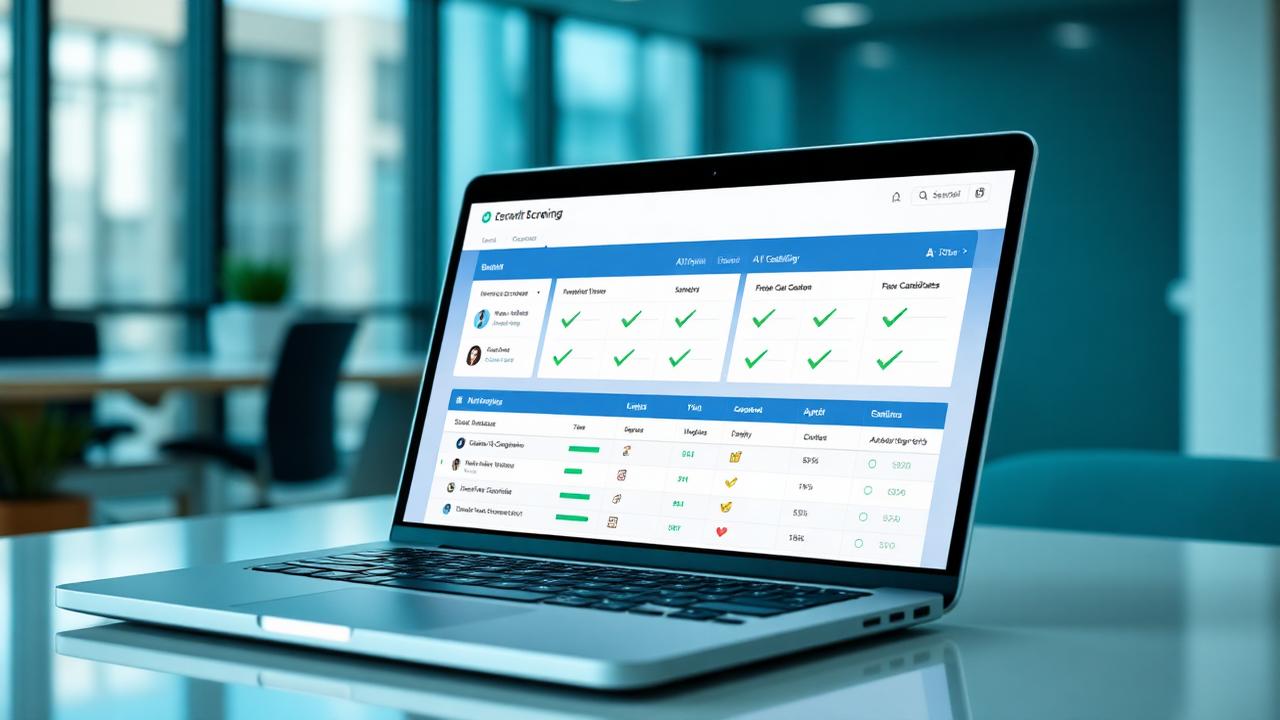
Candidates take it in 10–15 minutes from any device. You get a ranked scoreboard.
A 5-step shortlisting workflow
Step 1: Define the role in plain English Write the job description focused on outcomes ("ship features in a React + TypeScript codebase") not buzzwords ("ninja rockstar"). The clearer the brief, the better the test questions.
Step 2: Generate the test in 60 seconds With NexaHire's Talent Screener you paste the job description, click **Generate with AI**, and get 15 multiple-choice questions tailored to the role. Edit any you don't like.
Step 3: Include the test link in your job advert Add a single line to your advert: *"To apply, please complete this 10-minute assessment: [link]"*. This alone removes 40–60% of low-effort applicants.
Step 4: Review only the top scorers Sort the results dashboard by score. Read CVs for the top 10–15 candidates only. You have just turned a 150-CV problem into a 15-CV problem.
Step 5: Interview the top 5 Bring shortlisted candidates straight into a structured interview. Because they have already demonstrated baseline skill, you can spend the interview on culture, communication, and edge cases — not "do you actually know SQL?".
"We hired our last three engineers using assessment-first shortlisting. Time-to-hire dropped from 6 weeks to 11 days." — Engineering Manager, Leeds fintech
Common mistakes to avoid
- Making the test too long. Anything over 20 minutes hurts completion rates. 10–15 minutes is the sweet spot.
- Testing trivia instead of skill. "Which year was Python released?" tells you nothing. "What does this code snippet return?" tells you everything.
- Skipping the test for senior roles. Senior candidates appreciate a short, well-designed test — it signals you take hiring seriously.
- Not telling candidates their score. Sending a brief result email improves your employer brand.
Legal and fairness considerations in the UK
Pre-employment tests are fully legal in the UK provided they are:
- Job-relevant — questions must measure something the role actually requires
- Consistent — every candidate for the role takes the same test
- Accessible — offer extra time or alternative formats on request (Equality Act 2010)
Skill-based assessments reduce unconscious bias compared to CV screening, because they evaluate ability before background.
How NexaHire makes this free
Our Talent Screener is included with every NexaHire account. AI-generated questions, unlimited candidates, automatic scoring, ranked results — all free. Sign in and click Talent Screener in the header to start.